Adaptive UX for AI Scheduling
Scheduling Operations Agent transforms manual scheduling into an intelligent, autonomous process. The agent continuously learns and adapts, aligning with business goals and improving service delivery.
Overview
Purpose: Automate and optimize scheduling for service organizations, reducing manual effort and improving operational efficiency.
Business Impact: Addresses dynamic real-world challenges (e.g., sick calls, traffic delays, cancellations) that disrupt schedules and affect revenue.
Automated scheduling & real-time efficiency
A narrative prototype from the envisioning Workshop, exploring adaptive agent workflows, human-in-the-loop trust, and cross-domain orchestration for operational efficiency.
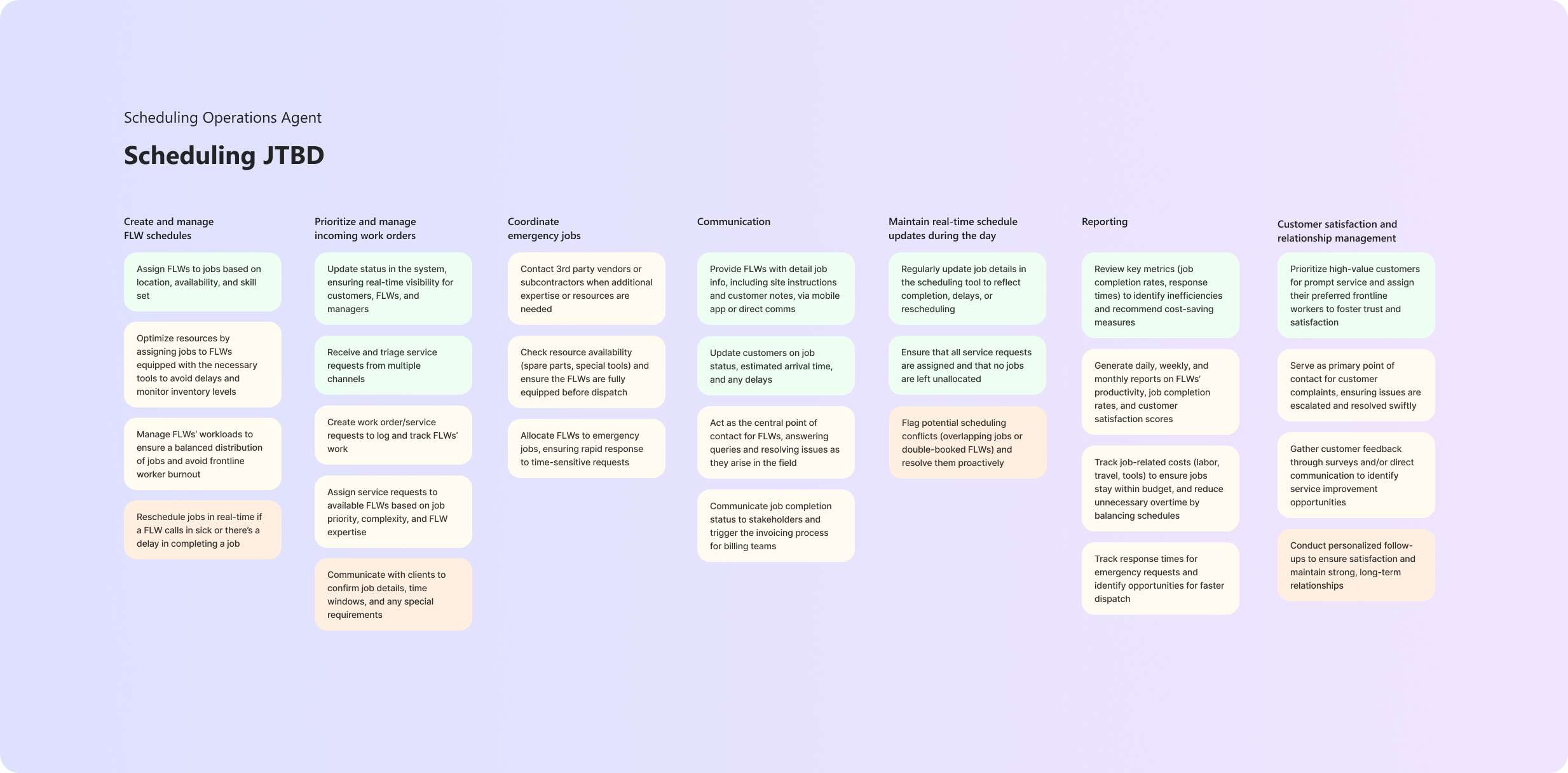
Scheduling impacts service organizations from revenue to reliability.
Illustrate real-world disruptions like sick calls, traffic delays, and cancellations that challenge manual scheduling.
Emphasize the dispatcher’s role and the mental load of maintaining optimal schedules.
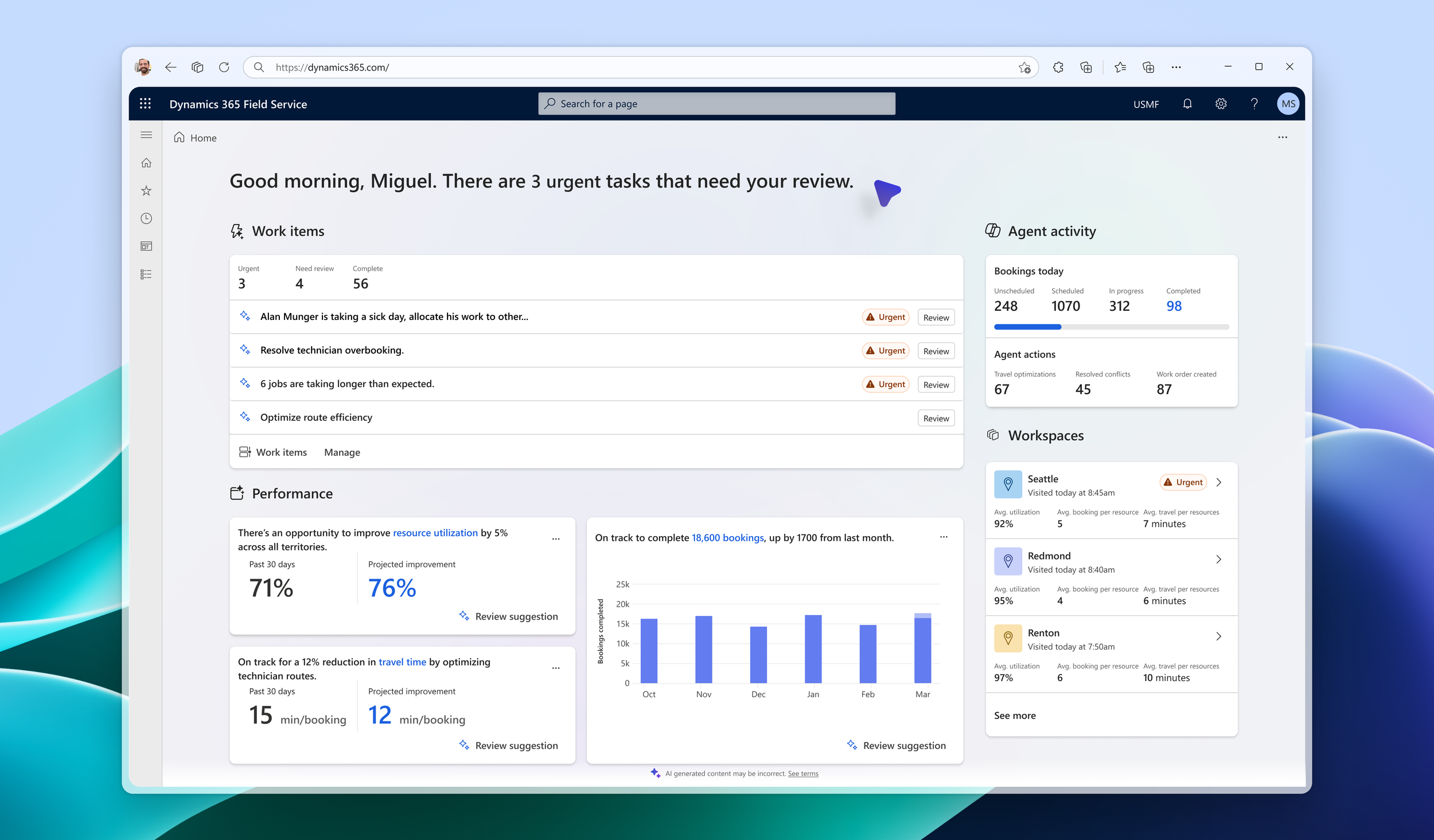
Dispatcher Experience - Morning briefing
The dispatcher starts the day with a clear overview of teams and territories.
The Agent monitors workforce activity across regions in real time.
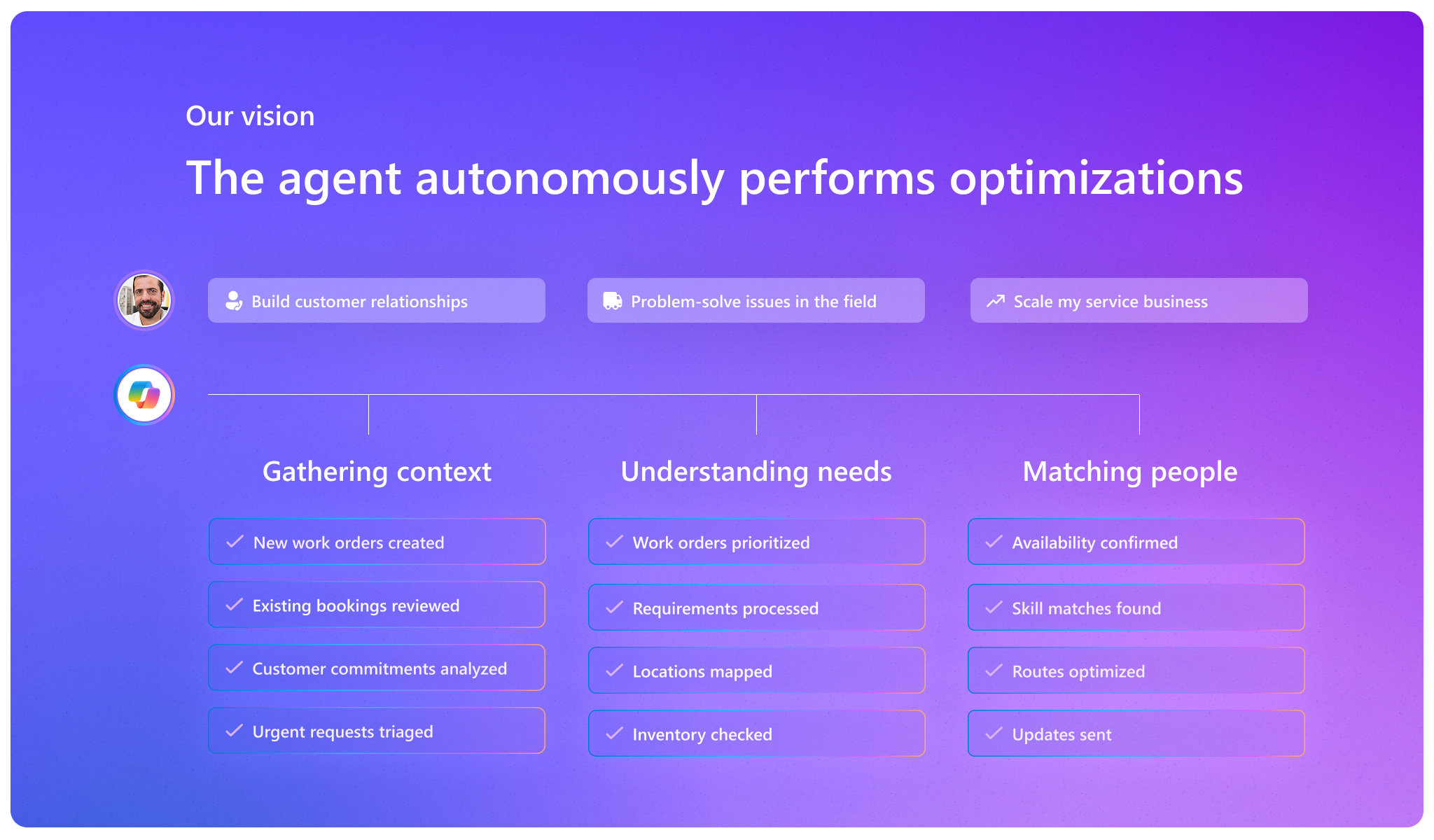
Today’s schedule is already optimized, autonomously created by the Agent.
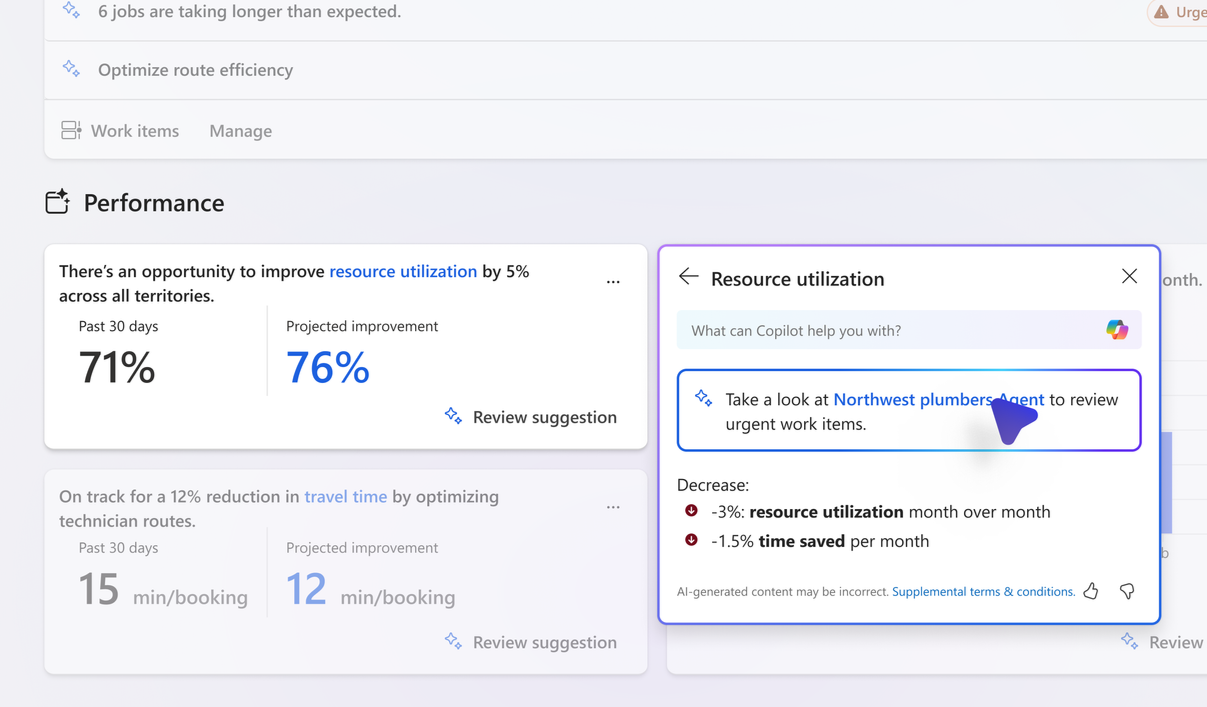
Reviewing AI suggestions
Quickly identify any potential issues, make informed decisions, and act on suggestions from Copilot on how to improve the schedules performance even further.
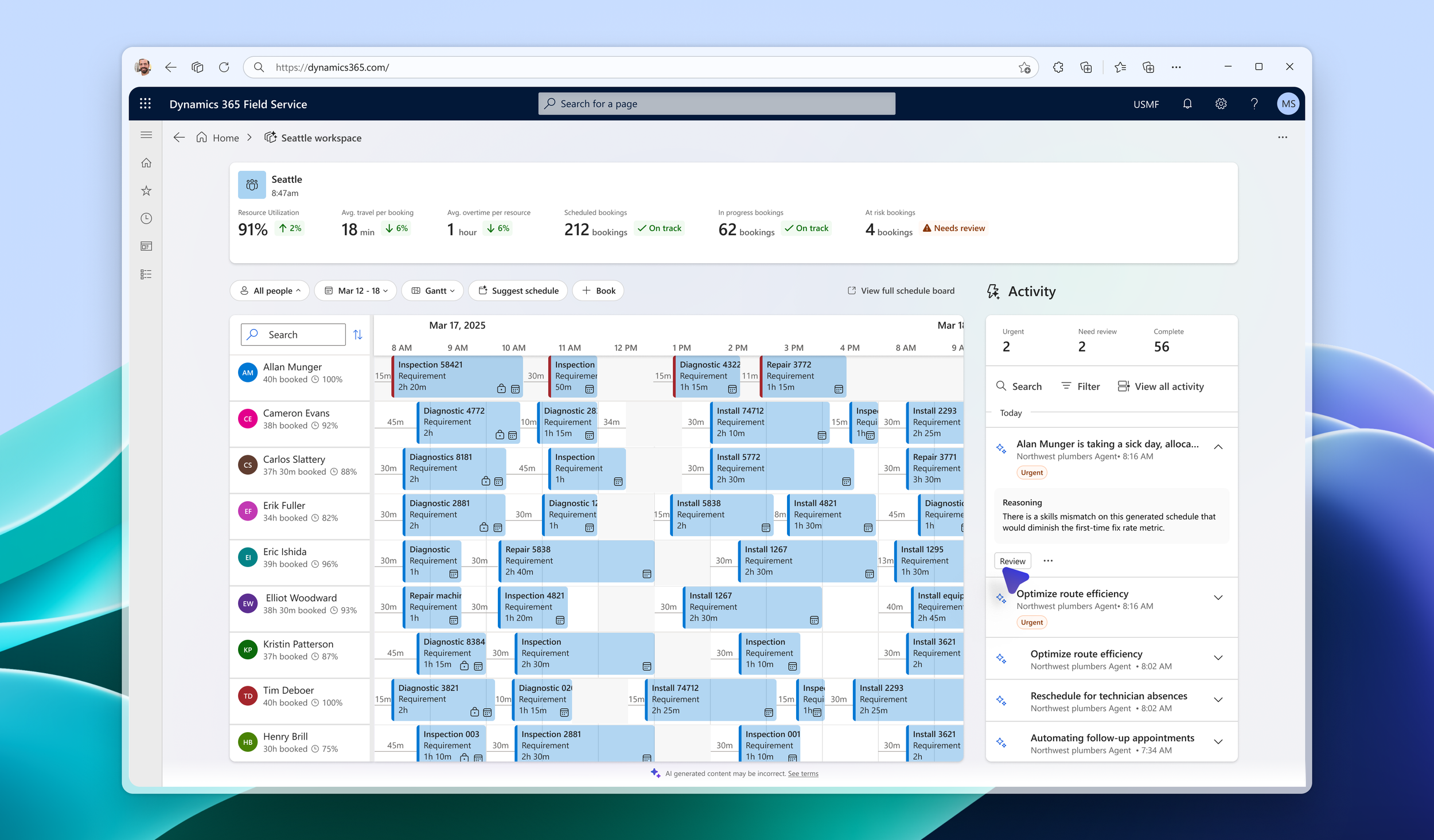
View activity
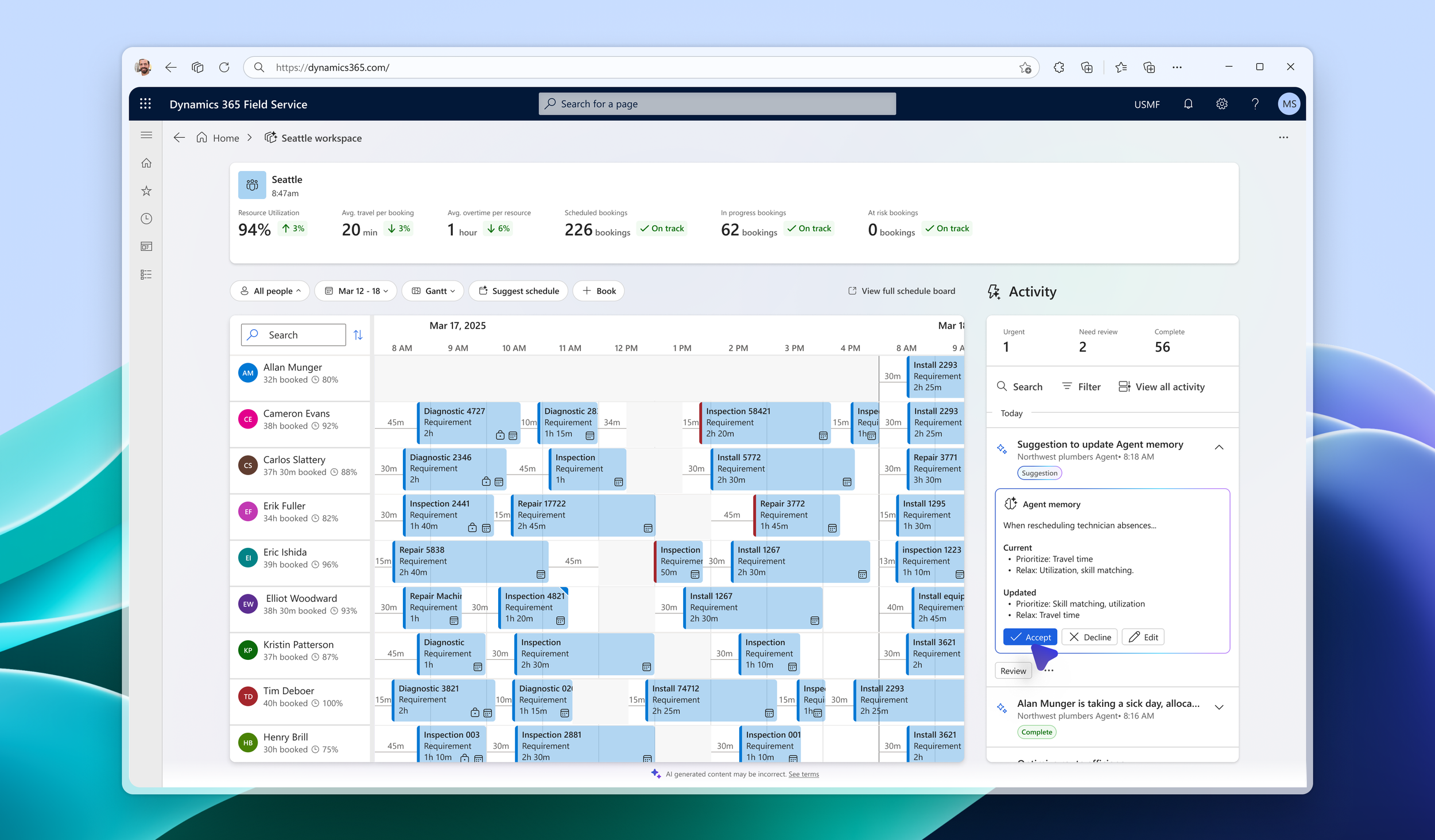
Here’s a single team’s schedule along with activities the Agent is autonomously performing.
The dispatcher notices an urgent task requiring his review.
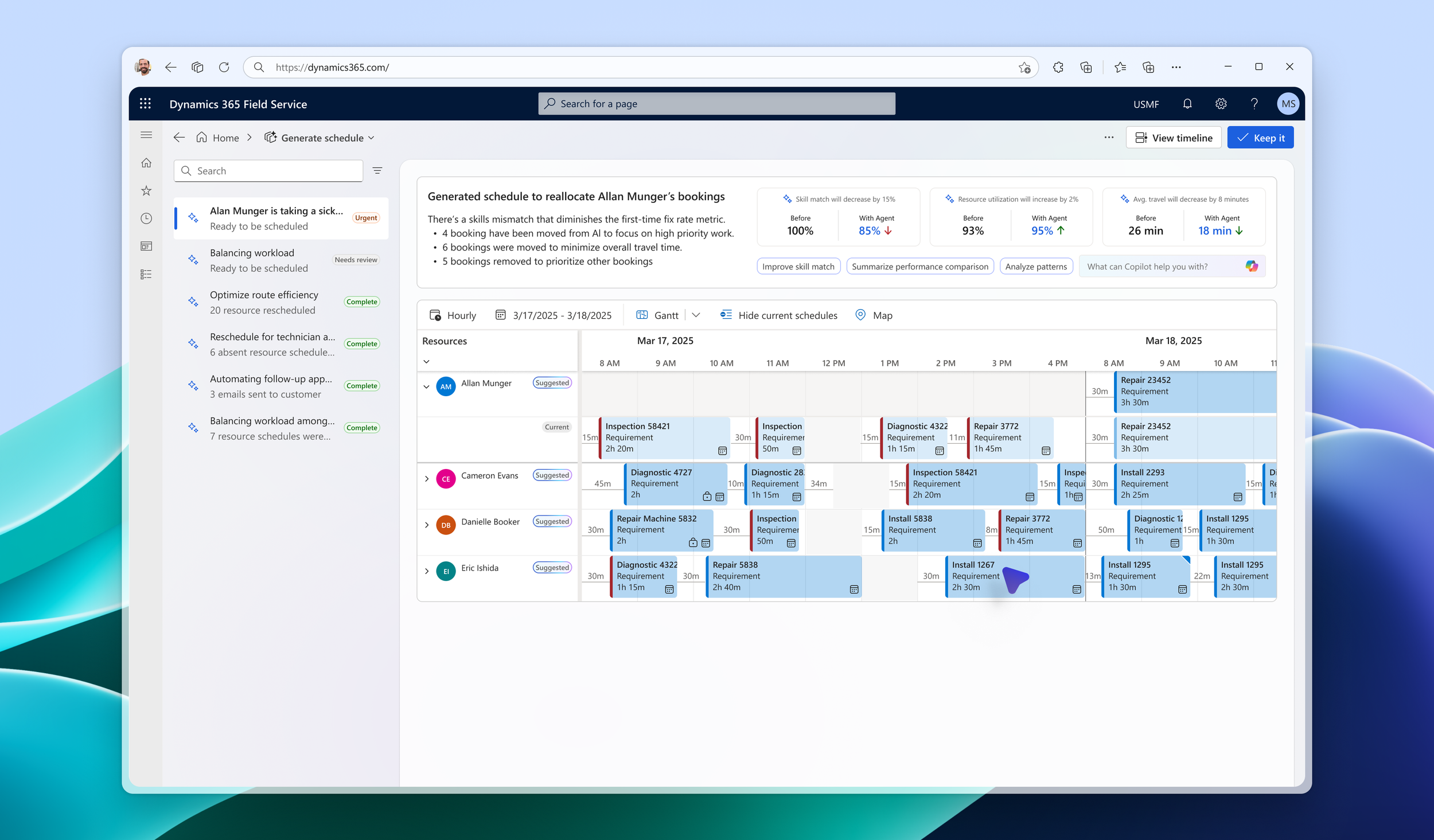
Reviewing tasks
An urgent task surfaces: the Agent’s proposed solution falls short on resource utilization.
The dispatcher steps in to review and adjust, ensuring standards are met.
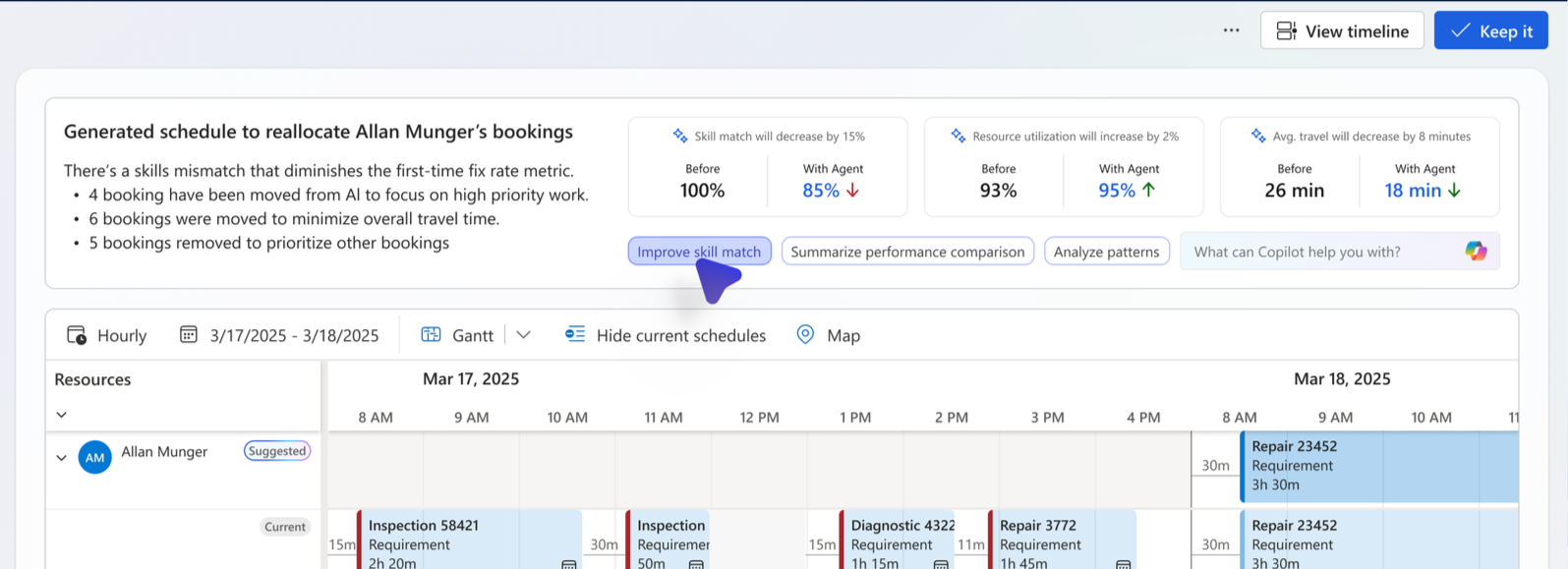
Collaboration with Copilot
The dispatcher consults Copilot for recommendations to better align technician skills with job requirements.
Copilot analyzes scheduling gaps and suggests targeted adjustments to improve resource utilization.
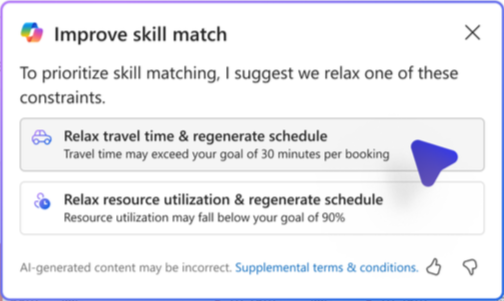
Improving the Agent for future tasks
A task prompts him to update the Agent’s memory to prioritize skill matching during rescheduling.
He reviews and accepts the suggestion, teaching the Agent to improve future decisions.